Profit & Loss
How did the business perform?
Review revenue and expenses for the reporting period to better understand profitability, cost activity, and changes in operating performance.
Financial Reporting
Get clear, consistent financial reports that help you understand business performance, financial position, cash flow, and the activity behind the numbers.
Clear Financial Information
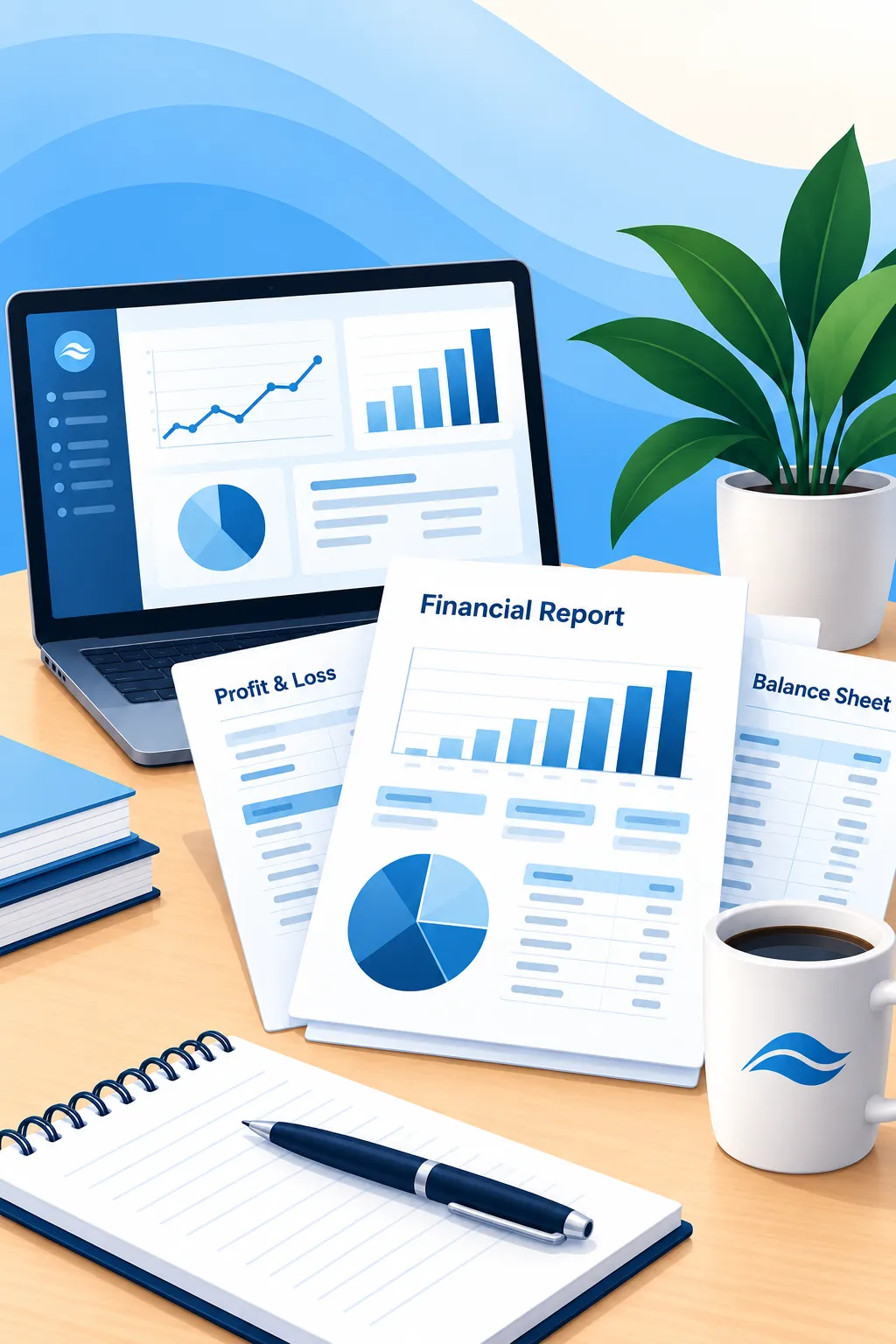
Accurate bookkeeping creates the underlying accounting record. Financial reporting organizes that information into a clearer view of how the business performed, what it owns and owes, and how cash moved during the period.
BlueWave Ledger prepares financial reports from your accounting records and helps put the results into practical context. Rather than simply delivering reports from QuickBooks Online, we can review balances, activity, and changes that may deserve your attention.
Reporting can be incorporated into recurring bookkeeping or provided as part of a broader accounting support engagement, depending on the needs of your business.
What's Included
The reports included in an engagement depend on your accounting needs, business activity, and the information that is useful for managing the business.
Core Financial Reports
No single financial statement tells the entire story. Looking at profitability, financial position, and cash flow together provides a more complete view of business activity.
How did the business perform?
Review revenue and expenses for the reporting period to better understand profitability, cost activity, and changes in operating performance.
What does the business own and owe?
Review assets, liabilities, and equity to understand the financial position of the business at a specific point in time.
Where did the cash go?
Review how operating, investing, and financing activity affected cash so changes in the bank balance have more financial context.
From Reports to Understanding
Financial reporting can help surface changes and relationships that are difficult to see when looking only at transactions or bank balances.
Review revenue and expenses together to see how operating activity is affecting the financial performance of the business.
Put changes in cash into context rather than relying on the current bank balance as the primary measure of financial health.
Review assets, liabilities, and equity to better understand what the business owns, what it owes, and how its position changes over time.
Period comparisons can highlight shifts in revenue, expenses, balances, and other financial activity that may warrant closer review.
Receivable and payable aging reports provide additional visibility into amounts customers owe and obligations the business still needs to pay.
Consistent reporting gives business owners a stronger financial foundation for evaluating operations, planning, and future priorities.
Questions Worth Asking
The purpose of financial reporting is not simply to produce a packet of statements each month. Useful reports help you notice what has changed and determine where a closer look may be worthwhile.
Is revenue growing, declining, or becoming less consistent?
Which expenses have changed meaningfully from prior periods?
Is the business profitable even when cash feels tight?
Are receivables or payables becoming larger or taking longer to clear?
Which financial trends deserve attention before the next reporting period?
The Accounting Foundation
Financial reports can only be as dependable as the accounting records behind them. Transactions need to be recorded consistently, accounts reconciled, balances reviewed, and necessary adjustments made before the reports can provide a useful view of the business.
For that reason, financial reporting often works naturally alongside recurring bookkeeping and month-end close support.
Record financial activity consistently.
Confirm that accounts and balances agree.
Evaluate the general ledger and period activity.
Turn the accounting record into financial information.
Financial Reporting
Tell us about your current accounting process and the financial information you need. We'll review your needs and determine whether BlueWave Ledger is the right fit.