Understand performance
Review revenue, expenses, profitability, and other financial results to understand what is influencing business performance.
Fractional CFO Support
Move beyond historical reporting with financial analysis, budgeting, forecasting, cash flow planning, and decision support tailored to the needs of your business.
From Reporting to Planning
Bookkeeping and financial reporting establish a clearer record of what has already happened in the business. As financial decisions become more complex, owners may also need help interpreting that information and considering what it could mean for the future.
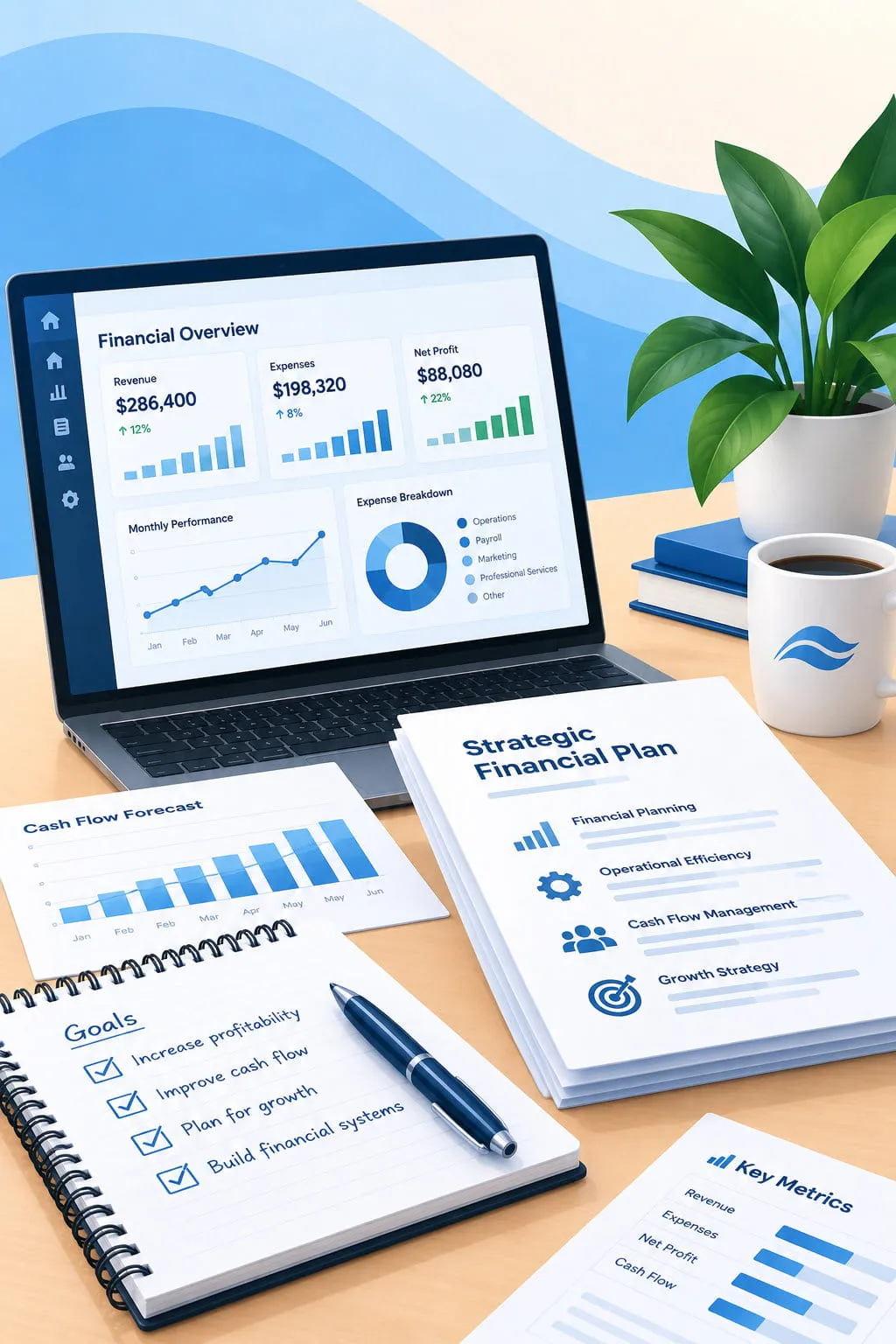
BlueWave Ledger provides fractional CFO support focused on practical financial analysis and planning. That can include reviewing performance, monitoring cash flow, comparing results with budgets, developing forecasts, evaluating variances, and modeling potential scenarios.
The objective is not simply to produce more reports. It is to make financial information more useful when evaluating priorities, planning ahead, and making business decisions.
What's Included
The scope of fractional CFO support depends on the financial questions, planning needs, and level of ongoing analysis that are useful for your business.
From Numbers to Decisions
Useful financial planning starts with reliable historical information, adds analysis and expectations about the future, and brings that context into business decisions.
Start with reliable financial information that provides a clear view of historical performance, financial position, and cash flow.
Review trends, variances, operating results, and other financial information to identify what may deserve closer attention.
Use budgets, forecasts, cash flow expectations, and scenarios to develop a clearer view of potential future financial outcomes.
Bring financial context into business decisions so owners can evaluate priorities, tradeoffs, and potential next steps more effectively.
Financial Visibility
Fractional CFO support can add context to the accounting information you already have and help turn it into a more useful planning resource.
Review revenue, expenses, profitability, and other financial results to understand what is influencing business performance.
Look beyond the current bank balance to consider expected cash inflows, outflows, timing, and potential future requirements.
Use budget-to-actual reporting and variance analysis to understand where actual results differ from expectations and investigate why.
Build forward-looking financial estimates using current information, operating assumptions, and expected business activity.
Identify financial and operational indicators that provide a practical way to monitor important aspects of business performance.
Use financial analysis and scenario modeling to better understand the potential implications of important business choices.
Planning Tools
Budgets, forecasts, and scenarios serve related but distinct purposes. Used together, they can provide a more structured way to think about future financial performance.
What are we planning to do?
A budget establishes financial expectations for a defined period and provides a baseline for comparing actual performance with the plan.
Where do current conditions suggest we're heading?
A forecast updates the financial outlook using current results, expectations, and assumptions about what is likely to happen next.
What could happen if our assumptions change?
Scenario analysis explores different assumptions to help evaluate the possible financial effects of changes in revenue, costs, timing, or business decisions.
Decision Support
Business decisions are rarely made from a single number. Financial analysis can help frame the tradeoffs, assumptions, and potential effects behind a decision before you move forward.
How is actual performance comparing with the budget?
What is driving meaningful changes in revenue or expenses?
How could upcoming decisions affect cash flow?
Which financial trends deserve more attention?
What happens under different revenue, cost, or growth assumptions?
Which financial metrics are most useful for monitoring the business?
Accounting + Advisory
Fractional CFO support does not replace reliable bookkeeping and reporting. It builds on them.
Accounting Foundation
Bookkeeping and financial reporting organize historical financial activity into a reliable accounting record and a clearer view of business performance.
Financial Advisory
Fractional CFO support uses historical information alongside assumptions and expectations to help evaluate performance and consider future financial outcomes.
Fractional CFO Support
Tell us about your current accounting process, financial reporting, and planning needs. We'll review your situation and determine whether BlueWave Ledger is the right fit.